
Allegany County Criminal Case Files
A criminal court record is the court file, not the arrest file. It starts once a charging document or related criminal filing enters the court system. In Allegany County, felony and certain misdemeanor charges filed by the grand jury or State's Attorney are Circuit Court matters. The Circuit Court also handles District Court appeals and jury-trial demands. The District Court of Maryland for Allegany County handles misdemeanors, certain felonies, traffic violations, landlord-tenant cases, replevin, and civil cases within its limit, but it does not hold jury trials.
The case file may contain charge lines, arraignment events, plea entries, motions, hearing dates, continuances, verdicts, dismissal entries, nolle prosequi entries, sentencing terms, probation, fines, costs, and appeal history. A charge line alone is not a conviction. For a closer look at the accusation itself, use the Allegany County arrest records and court charges page. For the full public-record search framework across civil, criminal, family, traffic, and Clerk files, use Allegany County court records.
Search Allegany County Criminal Records
Start with Maryland Judiciary Case Search for public District Court and Circuit Court criminal case records. Search by exact name or full case number when possible. Maryland Judiciary's current name-search rule defaults to exact names; partial last-name searches use at least the first character followed by the percent sign. If the case is not visible, the record may be restricted, sealed, expunged, too old for the online system, or held in a form that requires clerk contact.
- Open Case Search and choose the name or case-number search route.
- Search the defendant name as it appears in court records, or use the complete criminal case number.
- Narrow by court and county when those filters are available, separating Circuit Court from District Court.
- Read every charge line with the docket entries, plea, disposition, and sentence before drawing a conclusion.
- Request certified copies from the court clerk if the record is needed for legal use.
The research notes a browser challenge during automated inspection of live Case Search record screens, so no sample person or copied case is used here. The field and access facts come from official Maryland Judiciary and Allegany County sources.
Allegany County Criminal Case Stages
Criminal court records should be read as a process. Charges can be filed, amended, reduced, dismissed, or resolved by plea or trial. A docket may also show bond issues, warrants, violation of probation events, or appeals. The State's Attorney's role is central after arrest because that office reviews and prosecutes criminal charges in Allegany County.
Case flow: Charges Filed › Arraignment › Pretrial / Motions › Plea or Trial › Disposition › Sentencing
| Stage | What Happens |
|---|---|
| Charges Filed | A complaint, information, indictment, citation, or other charging document starts the court case. |
| Arraignment | The defendant is advised of charges and a plea may be entered. |
| Pretrial / Motions | The parties file requests, set hearings, address discovery, or resolve issues before trial. |
| Plea or Trial | The case resolves by plea, trial verdict, dismissal, or another court action. |
| Disposition and Sentencing | The court records the outcome, sentence, probation, fines, costs, or appeal steps where public. |
The Allegany County State's Attorney Office directory is one of the successful image sources for this page.
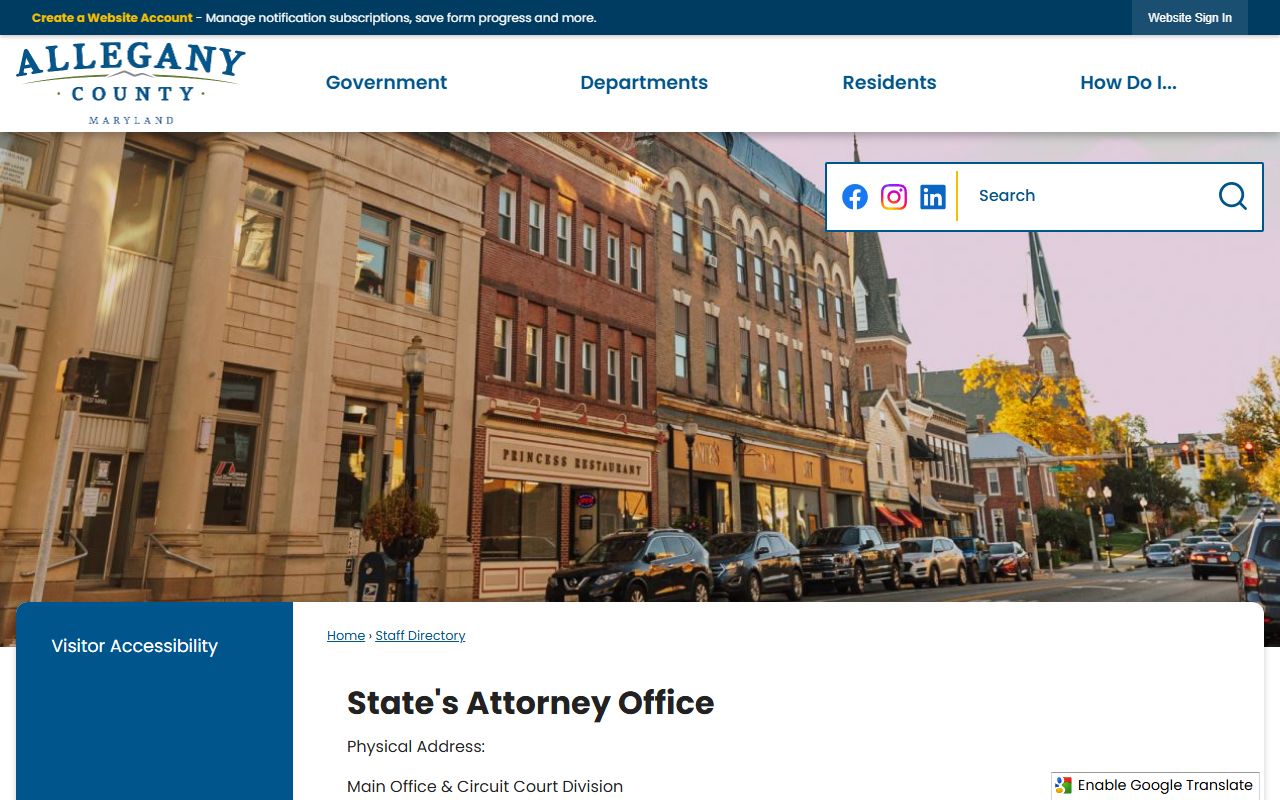
The directory supports the local distinction between the Main Office and Circuit Court Division and the District Court Division for criminal prosecution work.
Allegany County Criminal Record Fields
The research identifies the fields likely to appear in public Maryland criminal case records. The most important reading habit is to compare the charge with the disposition. A case may begin with one or more filed counts and later show a plea, verdict, dismissal, nolle prosequi, probation before judgment, sentence, or appeal. Booking data from the detention portal may list charges and a case number, but the portal notice says final disposition should be obtained from District Court or the court file.
| Field | What It Shows |
|---|---|
| Case Number | The unique court number. Use the exact number for copy requests and searches. |
| Court | Whether the case is in Circuit Court for Allegany County or District Court of Maryland for Allegany County. |
| Defendant | The person charged in the criminal case. |
| Charges | The charge text, count number, statute reference, arrest or citation number, and charging document when public. |
| Plea and Verdict | The defendant's formal answer and the trial or plea result, if entered. |
| Disposition | The outcome for the case or count, such as guilty, not guilty, dismissed, or nolle prosequi. |
| Sentence | Jail, probation, fines, costs, restitution, or other sentencing terms where public. |
| Appeal Status | Whether the case moved from District Court or to a higher appellate court. |
Charges and Convictions Compared
A charge is an accusation filed in court. A conviction is a final result after a guilty plea, verdict, or other court action that has the legal effect of conviction. Allegany County criminal court records can include charges that were amended, reduced, dismissed, or not prosecuted. For that reason, the disposition line carries more weight than the first charge line.
| Charge | Conviction | |
|---|---|---|
| Stage | Filed accusation | Case outcome after plea, verdict, or qualifying court action |
| Proof Level | Based on charging standards such as probable cause or prosecutor review | Requires proof beyond a reasonable doubt or a valid guilty plea |
| Record Reading | May appear early and later change | Should appear with disposition and sentence information |
Allegany County Criminal Court Offices
Maryland uses the title State's Attorney. James F. Elliott is listed as the Allegany County State's Attorney in the research. The official county biography says he was sworn in on February 24, 2021, later elected to the position, and had prior public-defender experience in the Allegany and Garrett region. The State's Attorney represents Allegany County in court proceedings and enforces state laws in criminal court.
The Maryland Office of the Public Defender serves eligible defendants. OPD District 12 covers the Allegany and Garrett region, and the Allegany Circuit Court information researched also lists a Public Defender phone number. Public-defense access matters because criminal court records may show counsel, motions, bond issues, plea negotiations, trial events, and post-disposition matters.
The State's Attorney directory also lists prosecutor and staff roles, including chief felony prosecution, deputy State's Attorney, assistant state's attorneys, victim-witness coordination, District Court supervision, and investigative support through the Allegany County Combined Criminal Investigation Unit. Those office roles help explain why a criminal record can show activity from several public offices even though the final court file is maintained by the court.
State's Attorney Office
59 Prospect Square, Suite 111
Cumberland, MD 21502
301-777-5962
Monday-Friday, 8:00 AM-4:00 PM
State's Attorney District Court Division
123 Liberty Street
Cumberland, MD 21502
301-777-5577
District Court criminal matters
The official biography for James Elliott is also assigned to this criminal-records page.
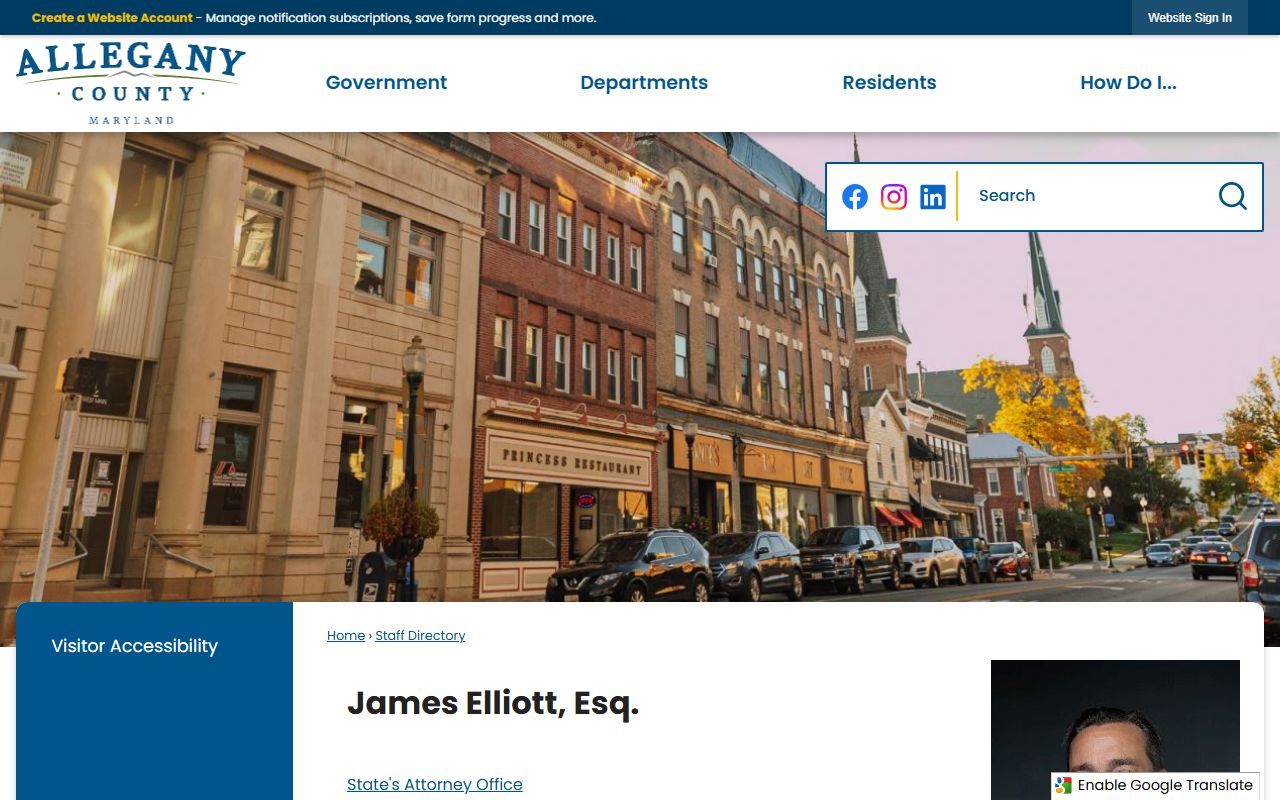
That source helps explain why prosecutor decisions must be separated from the arrest and booking data shown in jail records.
Sealed and Expunged Criminal Records
Juvenile records, adoption-related records, sealed files, expunged records, and protected personal information are not ordinary public criminal court records. Maryland expungement can remove eligible criminal records from public access when statutory conditions are met. The research names dismissals, acquittals, nolle prosequi entries, probation before judgment in eligible cases, and some older convictions as outcomes that may have different waiting periods and rules.
| Sealed | Expunged | |
|---|---|---|
| Public Visibility | Hidden from ordinary public view by rule, statute, or court order | Removed from public access through Maryland expungement procedure |
| How It Happens | By legal restriction, confidentiality category, or court order | By filing the correct petition in the court that handled the case |
| Important Limit | Some authorized users may still have access | Not a pardon or immigration remedy |
Official defense and expungement context appears through the Public Defender District 12 page and the Maryland Office of the Public Defender.
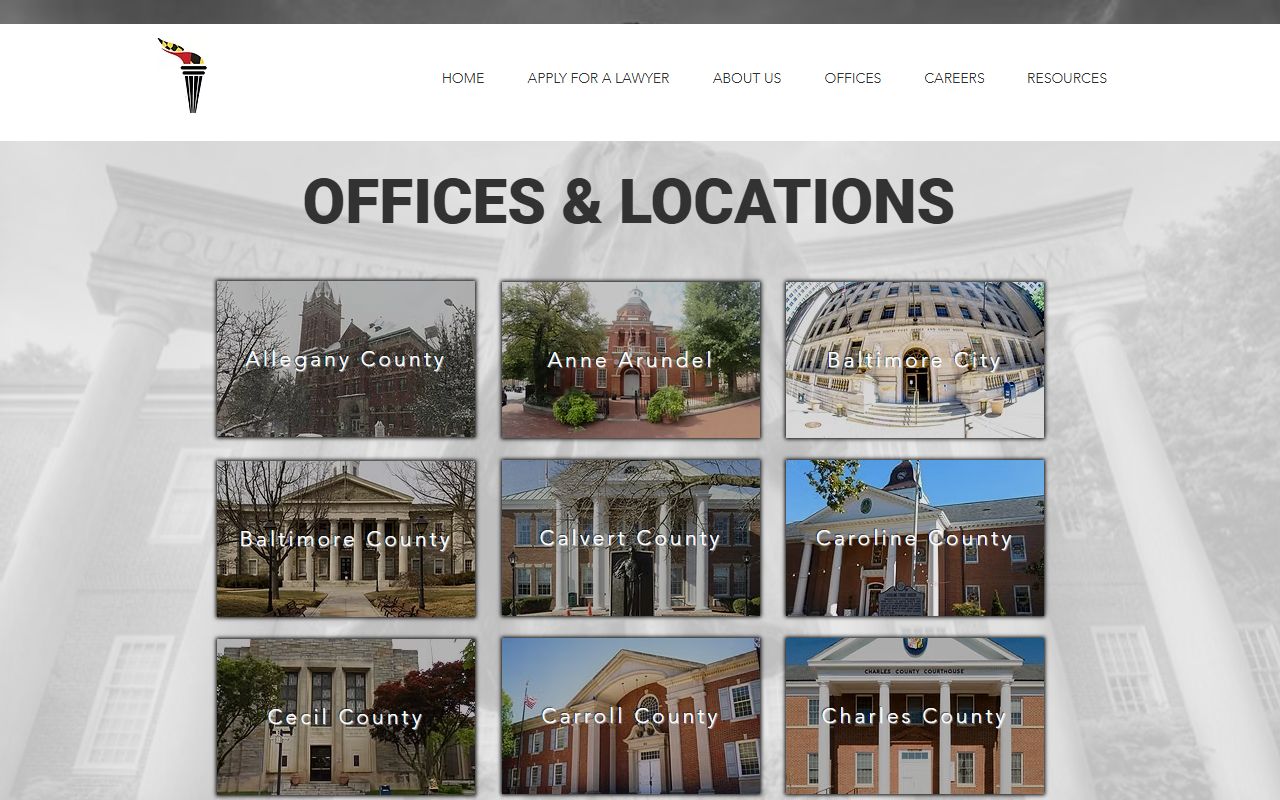
Public Defender resources are relevant when a criminal case involves eligibility for counsel, bond review, plea issues, juvenile matters, or post-case relief.

The statewide OPD source supplies the official channel for current public-defense access rather than relying on private attorney directories.
Public Access to Criminal Records
Maryland Rules on access to judicial records make many criminal case records public unless a rule, statute, court order, or confidentiality category restricts the record. Maryland criminal-procedure expungement provisions can remove eligible records from public view. Juvenile confidentiality laws and redaction rules also limit what appears in ordinary public searches.
For Allegany County, the practical access chain is Case Search first, then the court clerk that owns the file. Circuit Court criminal records route to the Clerk of the Circuit Court at 30 Washington Street. District Court criminal records route to the District Court location on South Liberty Street. If a record is tied to arrest, custody, or sheriff records rather than the court file, the Sheriff's Office or Detention Center may be the correct agency contact under public-records procedures.
Copy questions should be tied to the exact court. A felony indictment, District Court appeal, or jury-trial demand may point to Circuit Court, while a misdemeanor or certain felony may remain in District Court unless it moves. Matching the charge to the court prevents a search from stopping at the wrong counter.
Important: Do not use casual court searches as FCRA employment, tenant, credit, or insurance background reports.